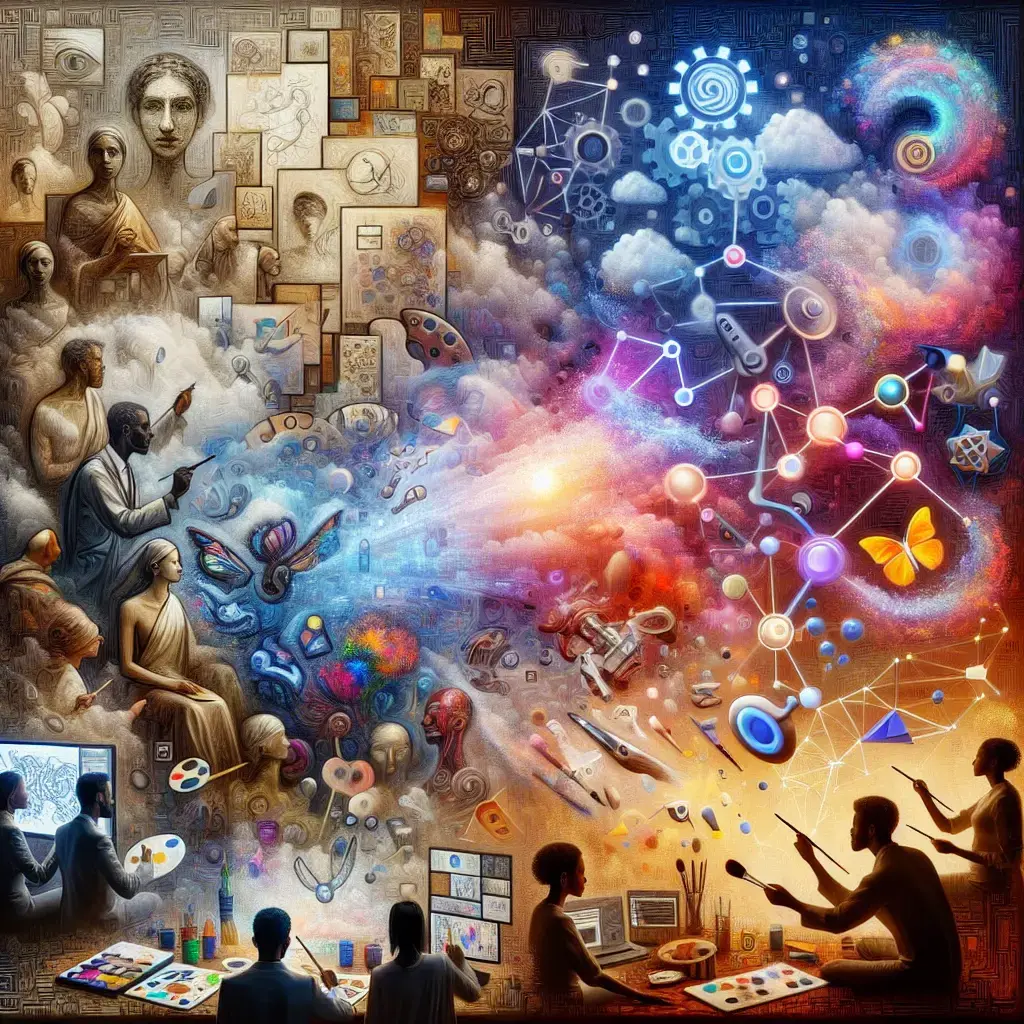
The Future of Creativity: How Generative AI is Transforming Art and Design
In the modern era, where the line between technology and creativity blurs more each day, generative AI emerges as a pivotal force reshaping the landscape of art and design. By integrating complex algorithms and machine learning with human creativity, AI is redefining traditional approaches, pushing the boundaries of artistic expression, and transforming methodologies across various creative industries. This shift towards AI-driven creativity represents not only a technological advancement but also a new paradigm in the way we conceive and create art and design.
AI in Art: A New Canvas for Creativity
The advent of AI-generated art has opened new avenues for artists, enabling them to explore innovative techniques and styles that were previously unimaginable. Creative AI tools are capable of analyzing vast amounts of data, learning from countless art forms, and generating unique pieces that combine the essence of historical art with contemporary trends. This digital art innovation is evident in platforms like DeepArt, which uses neural networks to transform photos into artworks that mimic famous painting styles.
AI's impact on the art world is not just limited to creation; it's also influencing curation and exhibition. Museums and galleries are leveraging AI to analyze visitor preferences and suggest personalized art experiences, enhancing engagement and accessibility. As machine learning in art continues to evolve, it presents exciting opportunities for both established artists and emerging talents to expand their creative horizons.
AI in Design: Revolutionizing Methodologies
In the realm of design, AI design tools are transforming how designers approach projects, enabling more efficient workflows and fostering innovation. Generative design techniques, for instance, allow designers to input specific constraints and objectives, letting the AI explore thousands of design iterations to find the most optimal solution. This approach is particularly beneficial in fields like architecture and product design, where functionality and aesthetics must seamlessly integrate.
One notable example is Autodesk's use of generative design in creating the interiors of Airbus planes, where AI proposed unconventional yet efficient designs that humans might not have considered. This illustrates the future of design with AI—where creativity and artificial intelligence work hand-in-hand to achieve results that are both groundbreaking and practical.
Case Study: Napkin's Visual Storytelling Revolution
Napkin, an AI-based tool for visual storytelling, exemplifies how generative AI can revolutionize business communication. By automating the creation of compelling narratives and visuals, Napkin empowers business professionals to enhance their presentations, making them more engaging and impactful. This application highlights the potential of AI creativity beyond traditional art forms, demonstrating its versatility in various industries.
The Economic Implications of AI-Driven Creativity
The economic landscape surrounding AI-driven creativity is complex and rapidly evolving. States like New Jersey are actively positioning themselves as AI epicenters through substantial tax incentives aimed at attracting AI businesses. However, as reported by NJ.com, while these initiatives hold promise for economic growth, the actual job creation impact remains to be seen. Such developments underscore the broader conversation about how AI investments can balance innovation with tangible economic benefits.
Meanwhile, companies like American Express, DoorDash, and JP Morgan Chase are integrating AI to streamline operations and enhance customer experiences (Forbes). These moves not only demonstrate the utility of AI in improving business processes but also emphasize its role in fostering a culture of innovation.
The Challenges and Opportunities Ahead
Despite the promising advancements, the integration of AI in art and design also presents challenges. Concerns about job displacement due to automation are prevalent, as significant AI investments lead companies to reevaluate their workforce needs (The Guardian). Yet, this transformation doesn't necessarily spell doom for creative professionals. Instead, it invites a reimagining of roles where humans and machines collaborate creatively rather than compete.
Moreover, the ongoing SAG-AFTRA strike over AI's impact on the gaming industry highlights critical debates about intellectual property and labor rights (Variety). As these discussions unfold, they will shape how we navigate the ethical dimensions of integrating AI into creative industries.
Looking Forward: The Path of Innovation
As we stand on the brink of this dynamic evolution in art and technology, the future of creativity appears both exciting and uncertain. Big tech companies are investing heavily in AI, with billions flowing into research and development (Reuters). The upcoming financial reports from giants like Amazon, Apple, Meta, and Microsoft will likely influence market perceptions and investment strategies in AI (CNBC).
However, amidst the hype, questions about profitability remain persistent. The challenge lies not only in developing advanced technologies but also in ensuring they deliver sustainable economic returns (TechCrunch).
As we delve deeper into this thrilling frontier where imagination meets technology, it becomes imperative for artists, designers, and technologists to collaborate, ensuring that the transformative power of generative AI enhances human creativity rather than overshadowing it. In doing so, we unlock new dimensions of artistic potential that promise to redefine what is possible in art and design.
Conclusion: Embracing the Fusion of Creativity and AI
Generative AI is undeniably transforming the realms of art and design, offering groundbreaking possibilities and fostering innovation. Key takeaways from this transformative journey include:
Revolutionizing Art: AI tools empower artists to explore unprecedented techniques, enhancing both creation and curation in the art world.
Advancements in Design: By leveraging generative design, AI optimizes workflows and fosters innovation, as seen in applications within architecture and product design.
Economic Impact: While AI-driven creativity holds potential for economic growth, balancing innovation with job creation remains a challenge.
Challenges and Ethical Considerations: As AI becomes more integrated, debates over job displacement, intellectual property, and labor rights are increasingly critical.
The integration of AI in creative industries challenges us to rethink traditional roles, prompting collaboration between humans and machines. This transformation invites not only technological advancement but also a reimagining of creativity itself.
As we continue to explore this frontier, it's crucial to ensure that AI complements rather than overshadows human creativity. By working together, artists, designers, and technologists can unlock new dimensions of artistic potential, pushing the boundaries of what is possible in art and design.
I invite you to share your thoughts and experiences on how AI is impacting your creative journey. What opportunities or challenges have you encountered? Join the conversation and let’s explore this exciting future together!
Warm regards,
Olivia Maxwell