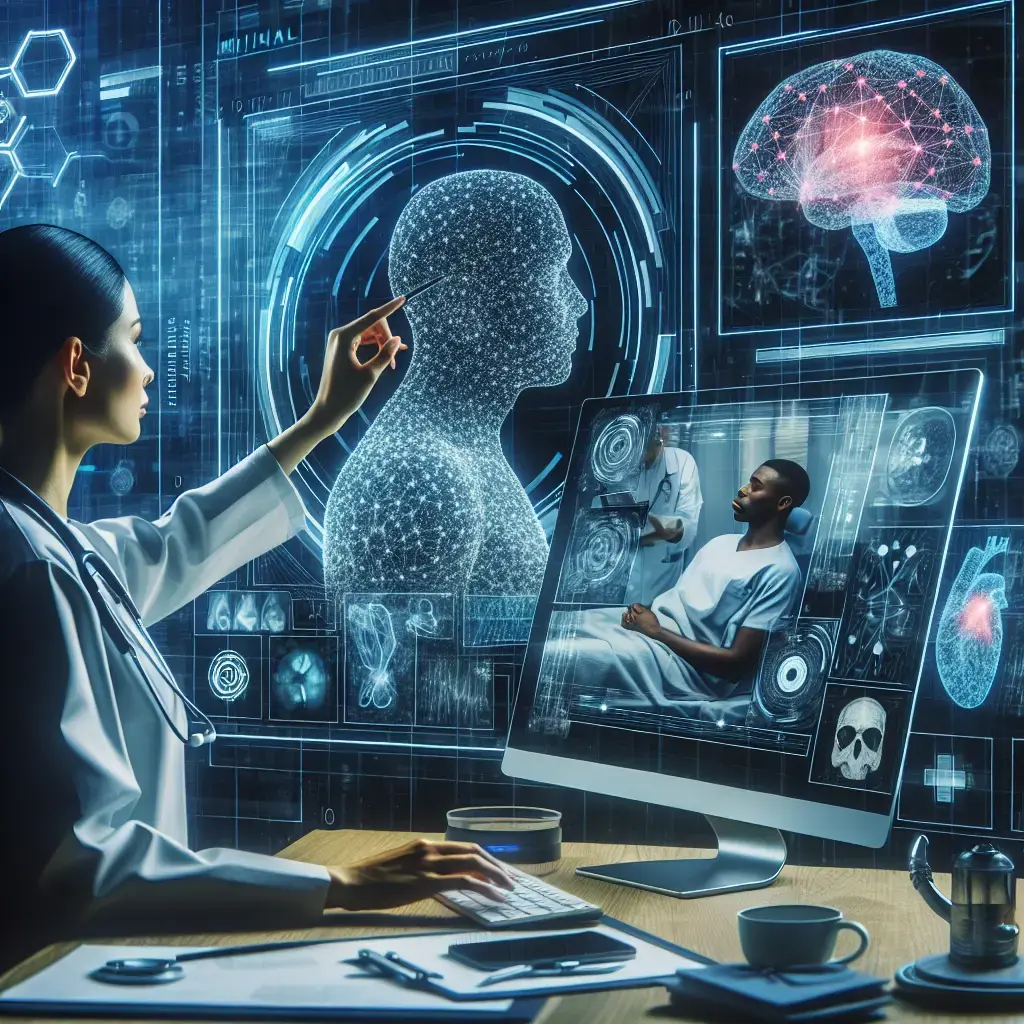
Transforming Healthcare with Generative AI
In the rapidly evolving world of medicine, generative AI is revolutionizing how professionals approach diagnosis and treatment. This cutting-edge technology, which leverages machine learning, is setting new benchmarks in AI-enhanced diagnosis and medical treatment. As healthcare AI technologies continue to advance, the integration of AI-driven solutions into clinical settings offers unprecedented opportunities to improve patient outcomes.
Generative AI-powered healthcare tools are increasingly adopted for their ability to analyze vast datasets, enabling more accurate disease diagnosis and personalized treatment plans. These advancements are reshaping patient care by offering tailored solutions that consider individual patient needs and genetic profiles. With AI for disease diagnosis, medical professionals can detect conditions earlier and with greater precision, ultimately leading to improved prognoses.
Generative AI in Healthcare: Enhancing Diagnosis and Treatment
The integration of generative AI in healthcare has transformed how medical professionals diagnose and treat diseases. This revolution, driven by advancements in machine learning and AI-enhanced diagnosis, is setting new standards for patient care. As healthcare AI technologies continue to evolve, they present unparalleled opportunities to enhance clinical outcomes and streamline medical processes.
AI-Enhanced Diagnosis: Precision and Early Detection
One of the most significant benefits of generative AI in healthcare is its ability to improve disease diagnosis. AI-powered tools can analyze vast datasets, leading to more accurate and earlier detection of conditions. For instance, AI-driven solutions excel at sifting through complex genetic data to identify markers of diseases that might otherwise go unnoticed.
Consider the case of AI in diagnostic imaging. Traditional techniques often depend on a clinician’s expertise to detect anomalies. However, AI provides a second pair of eyes, identifying patterns and irregularities with exceptional detail and speed. This not only aids in early intervention but also enhances the precision of diagnoses, ultimately improving patient prognoses.
Example: A study published in Nature Medicine highlighted how AI algorithms could outperform human radiologists in detecting lung cancer from CT scans. Such advancements exemplify the potential of machine learning in medicine to redefine diagnostic processes.
Personalized Treatment Plans: A New Era of Care
The integration of generative AI extends beyond diagnostics, profoundly impacting treatment methodologies. AI for personalized treatment allows clinicians to tailor therapies based on individual patient profiles, including genetic makeup, lifestyle factors, and health history.
Case Study: The use of AI in medical treatment was demonstrated by IBM Watson, which has been employed in oncology to assist doctors in creating customized cancer treatment plans. By analyzing a patient's genetic data alongside vast medical literature, Watson can suggest personalized treatment options that may have been overlooked otherwise.
Such innovations ensure patients receive the most effective treatments, minimizing side effects and maximizing therapeutic benefits. This level of personalization marks a shift from the traditional one-size-fits-all approach to a more nuanced strategy that aligns with modern medical ethics.
The Role of AI in Clinical Settings: Streamlining Processes
AI-driven healthcare solutions are increasingly integral to clinical settings. From scheduling appointments to managing patient data, AI tools offer efficient solutions that reduce administrative burdens and allow healthcare professionals to focus on patient care.
Recent Development: According to HealthTech Magazine, hospitals adopting AI-powered systems for administrative tasks have reported up to a 30% increase in efficiency. These systems automate routine tasks such as billing and record-keeping, allowing staff to dedicate more time to direct patient interaction.
Moreover, AI for disease diagnosis is being integrated into electronic health records (EHRs), where machine learning algorithms can flag potential health issues before they escalate. This proactive approach not only improves patient outcomes but also optimizes resource allocation within healthcare facilities.
Challenges and Considerations: Balancing Innovation with Ethics
While the potential of generative AI in healthcare is vast, addressing the ethical implications and challenges that accompany its deployment is crucial. Issues such as data privacy, bias in AI algorithms, and the need for regulatory oversight are paramount.
Current Debate: As reported by The Guardian, there is ongoing discourse about how best to regulate AI in clinical settings to ensure patient safety and privacy. This debate underscores the necessity of developing robust frameworks that balance innovation with ethical considerations.
Additionally, potential job displacement caused by AI technologies remains a concern. While AI streamlines processes and enhances efficiency, it also alters workforce dynamics within healthcare institutions. A thoughtful approach to integrating these technologies is required to mitigate adverse impacts on employment.
Future Prospects: Bridging Technology and Human Expertise
As we look towards the future, the continued advancement of generative AI applications in healthcare holds promise for even greater transformations in medical treatment and diagnosis. The synergy between technology and human expertise will be pivotal in navigating this new landscape.
Rhetorical Question: How might we harness these advancements responsibly to ensure that both patients and healthcare providers benefit from these technological leaps?
By fostering collaboration between tech developers, medical professionals, and policymakers, we can create an ecosystem where AI advancements enhance rather than replace human expertise. The ultimate goal is to cultivate an environment where technology acts as an enabler for better patient care rather than a substitute for human compassion and judgment.
Conclusion: The Transformative Power of Generative AI in Healthcare
Generative AI is reshaping the landscape of healthcare, offering innovative solutions that enhance both diagnostic and treatment processes. Let's recap the pivotal points discussed:
AI-Enhanced Diagnosis: By leveraging vast datasets, AI tools improve precision and enable early detection, significantly enhancing patient outcomes. AI's role as an adjunct in diagnostic imaging exemplifies its potential to refine traditional practices.
Personalized Treatment Plans: AI facilitates the creation of tailored treatment strategies based on individual patient profiles, marking a shift from conventional approaches. The case of IBM Watson in oncology highlights the promise of personalized medicine.
Streamlining Clinical Processes: AI-driven systems are optimizing administrative tasks, allowing healthcare professionals to focus more on patient care. This integration into clinical settings illustrates the efficiency gains AI offers.
Ethical Considerations: As we embrace these advancements, it is crucial to address challenges related to data privacy, algorithmic bias, and job displacement. Thoughtful regulation and ethical oversight are essential to balance innovation with responsibility.
The future of healthcare lies in the harmonious collaboration between AI technologies and human expertise. By fostering partnerships among tech developers, medical professionals, and policymakers, we can ensure that AI acts as a catalyst for improved patient care rather than a replacement for human empathy and judgment.
As you reflect on these insights, consider how generative AI might continue to transform healthcare in the coming years. What opportunities and challenges do you foresee? Share your thoughts and experiences in the comments below. Your insights are invaluable in shaping the dialogue around this critical topic.
Thank you for joining this exploration of generative AI's impact on healthcare. Together, let's navigate the path towards a future where technology and humanity work hand in hand for the betterment of patient care.
Author: Olivia Maxwell